Final Thoughts On THE Conspiracy Theory
... which evidence shows never happened

I expected a fair amount of reaction when I said in yesterday’s column (You Ask; I Try to Answer; May 4) that while I was anything but a conspiracy theorist, that certain things about the Trump assassination attempts were troubling, to say the least.
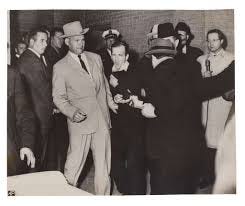
Well, I did get reaction, all right, both via Substack but even more via email, but not very much about the Trump follies. People were aroused by my remark that I was convinced that Lee Harvey Oswald acted alone.
One man told me that there were at least two gunmen on the grassy knoll. A lawyer I deeply respect told me that the killing shot came by accident, from a high-powered rifle in a Secret Service car that went off accidentally when the driver stepped on the gas after Oswald’s first shot. And an intelligent woman told me that she could tell from the film of Oswald getting shot that he “knew the second he saw Ruby he was a dead man.”
Well, I have spent a fair amount of time studying the assassination. I have been to Dallas. When you look out the window, the question is not how did Oswald hit Kennedy; it’s how could he miss? The car was going 10 miles an hour.
The pictures you’ve seen were taken through a wide-angle lens. In reality, the grassy knoll is barely a bush. When I see the film of Ruby shooting Oswald, I don’t see the look on his face my friend saw. But he might have indeed concluded he was a dead man when he saw the gun pointed at his own guts.
And as for Ruby — back in 2003, an old gravelly-voiced man named Earl told me he wanted to talk to me about his brother. He liked what I wrote, and thought I told the truth. “I want you to write the truth about my brother," he said.
His brother, Jack Ruby.
Earl Ruby was running a dry cleaners in Detroit when the assassination happened. He was then 48; Jack was 52. The two brothers were extremely close. He told me there was no truth to the idea that it was part of a wide conspiracy. “Jack just did it on impulse. He loved President Kennedy,” Earl told me.
Fine, but how can you prove that? I said. Earl looked at me. “You got a dog?” he said. Yes, I said. At that time, I had three dogs. Jack Ruby had gone to Western Union to wire rent money to a stripper who worked for one of his nightclubs. He noticed a commotion at the police station across the street, and wandered over.
The rest is history. “Jack left his favorite dog, Senator, on the front seat of his car. Would you do that if you thought you were about to be arrested?”
I thought that was a good point. Earl, then 88, an old heavy smoker who was breathing oxygen through a tube in his nose, knew his brother was an erratic mess, emotional, flamboyant and sometimes violent. But he loved him. “He owed me $16,000,” he said. “I didn’t care if I never got it back.”
Everybody who knew Ruby in Dallas knew he was a pathetic loser who no one would trust to be part of a conspiracy.
Virtually everyone who honestly does the research into the assassination comes to the conclusion that I have, that Stephen King did after researching his great novel, 11/22/63. Oswald acted alone, and so did Ruby. Hard to believe, but a 24-year-old failure killed the most powerful man in the world on a Friday afternoon, and am amateurish police department allowed their most important prisoner ever to be whacked by a pathetic slob two days later.
Truth really is stranger than fiction, indeed.
There's is also the issue of the "magic bullet."
Jack, it looks like you have removed some of my comments.
How did I offend you?
People interested in the JFK assassination should check out the Rob Reiner podcast "Who Killed JFK?" It introduces some new perspectives and raises a lot of questions.