Just Scratching the Surface: Mainstream Media and Black History Month
We desperately need to go beyond the superficial

(Editor’s Note: This is an updated and expanded version of a story I wrote earlier this month. This version also was published in the Toledo Blade newspaper. JL)
DETROIT – We’re in the last few days of Black History Month, which is normally noted during the first few days of February, and then mostly forgotten, though it shouldn’t be.
Actually, it’s not at all clear how seriously anyone takes the event. Newspaper editors often feel obliged to run inspirational stories about the pantheon of civil rights heroes, from Frederick Douglass to the Rev. Dr. Martin Luther King Jr.
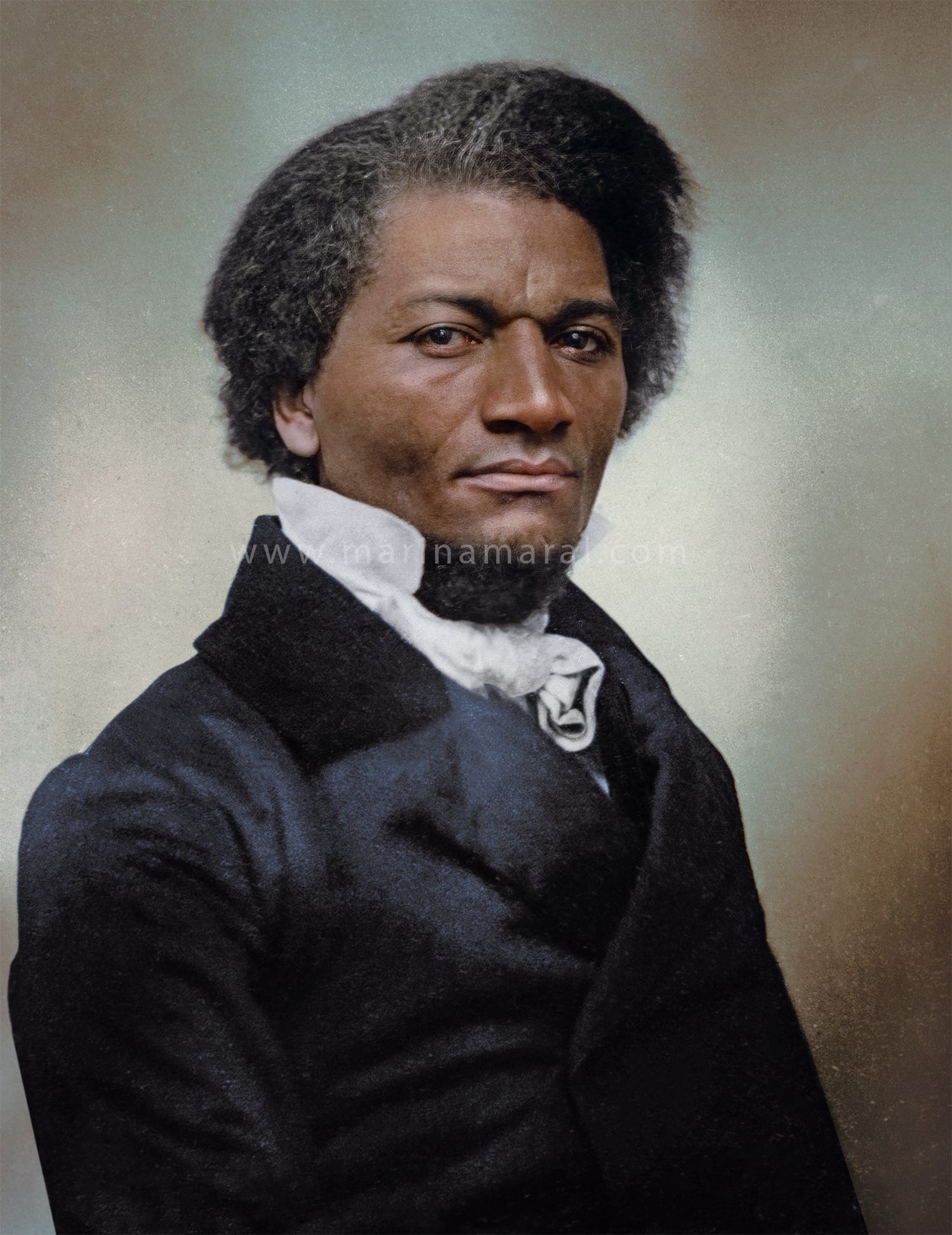
Sometimes they write controversial ones, about the way in which the dream has yet to be fulfilled, or the persistence of racism.
But it seems to me that at most, we just scratch the surface of what Swedish sociologist Gunnar Myrdal famously called the American Dilemma – how white and Black people get along.
Thirteen years ago, Detroit was rocked by a political earthquake when Mike Duggan, a longtime politician from the suburb of Livonia, moved into Detroit, then about 80 percent Black, and announced he was running for mayor. Most observers thought that was a crazy stunt and political suicide. A decade earlier, it would have been.
When he was ruled off the ballot on a technicality and announced he would run as a write-in candidate, I thought it was a hopeless effort. At the time, I had an African-American secretary in her mid-60s, and I asked her who she planned to vote for.
“Duggan,” she said. When I asked why, she said, “We had it for 40 years (the mayor’s office) and all we did was screw it up.” That wasn’t fair, but it was a view that was widely held. Mike Duggan easily won.
One of his most effective campaign techniques was to spend a couple hours every week in an African-American living room, talking to the family and their neighbors about their concerns. Duggan continued that all through his 12 years as mayor, and faced only token opposition his next two elections
One well-regarded political commentator, consultant and once a top aide to former Mayor Dave Bing when he was in office, told me that “for many black folks, praise and support mean much more coming from someone white.”
Ten years ago, I would have said that both racism and antisemitism were far smaller a problem that they had been in, say, the 1950s or 60s. Today, I think I underestimated both.
Certainly, there is still a lot of misunderstanding. My plumber asked me a few years ago why all Black kids got to go to college for free. I’m not sure he believed it when I explained that they didn’t.
A few years before that, I was in a cab in Charleston, S.C. with a driver who was a proud member of the Nation of Islam. He told me he felt angry whenever he saw white people “pretending” to be homeless. He told me he knew very well that whites took care of their own, and that no white person had to live on the streets.
I told him that there was a lot of inequality, and that it was certainly easier to be white than Black, there were still some white people who were really destitute and had to live on the street.
But while there’s a lot of ignorance across the board, in general, African-Americans understand white society much better than whites understand them. That may be because those who have less power have a greater incentive to learn about the dominant culture, if only for survivalist motives.
When I graduated from high school in 1969, I had never heard of most of our nation’s great Black intellectuals, including W.E.B. DuBois and Frederick Douglass. I didn’t know who Marcus Garvey had been, or even who Nat Turner was or Robert S. Abbott, the great pioneering publisher of the Chicago Defender.
I later educated myself about Black History, and in 2018, Block Communications Inc. asked me to research and write a book that became Reason vs. Racism, which covered how their newspapers and broadcast properties had covered race over a century in the business.
I thought the company had done a better job than many other media organizations, but what I came to wonder was this:
Given the way whites had treated Blacks just during the century and a half since the end of slavery, how could they not hate all white people? I read about the Tulsa Massacre, the Red Summer of 1919, and about the Detroit Riot, not the famous one of 1967 but the one that happened in 1943, during World War II.
The fact that the races have made as much progress as we have is, to me, truly remarkable. But the fact is that all of us need to have open minds and learn more about each other, if we are to have the better future we need.
PS: The main picture appearing with this article shows Jesse Jackson, Ralph Abernathy and The Rev. Dr. Martin Luther King on the balcony of the Lorraine Hotel in Memphis, shortly before King was assassinated.
I don’t remember much of any black history being taught in high school. But in summer school, I was 15 or 16, we were assigned Black Like Me and In The Heat of the Night. As a kid I didn’t read much, but those two made me think there is something to this reading thing. Then along came blues music into my life and got me looking into its history. Later, I did read some more straight up black history and developed the idea that what’s good for a minority is likely good for the country. There’s a little outsider in all of us and I think that’s what has to be reached to induce empathy for some.