Meet a Community Hero
If our cities had more heroes like Max, we'd all be better off.

Detroit has long been a city that’s attracted odd characters, from Jack Kevorkian to flamboyant (and often crooked) politicians, ministers and eccentric athletes, such as Mark “the Bird” Fidrych, who talked to the ball and came out of nowhere to be the league’s best pitcher for a career that lasted one glorious year.
Then back during the worst days of the pandemic, in 2020 and 2021, I heard rumors of a mysterious figure called the “plague doctor,” who went out and picked up trash, including masks and gloves that people threw away out of fear.
Later, the plague doctor, who wore an outfit straight out of a 1950s science fiction movie, reportedly organized groups of people to clean up the streets. (See her costume at the beginning of this article.)
Some of their work was in Detroit, or at least along the banks of I-75, but most seemed to be in the little quaint enclave city of Hamtramck embedded in the big city’s west side.
I always wanted to learn more about the mysterious plague doctor, who some said was female and others male, but I was busy, and never followed up on it.
Then two months ago, I attended a ceremony honoring a Hamtramck historian run by the city’s community improvement coordinator, a woman named Max Gilginas.
To my surprise, she turned out to be none other than the plague doctor. She told me that what mattered most to her in life was looking out for her fellow citizens, especially the elderly.
Mrs. Gilginas, (her husband has a different last name, but she dislikes Ms.) now 49, studied theatre in college; then joined the army. But her military career ended with a serious injury, breaking her feet while she was training to be an officer. Eventually, she ended up in Hamtramck, and fell in love with the vibe of the quirky little town.
“It was, in the 90s, a haven for queer artists and alternative folks,” said Max, who identifies as “gender fluid.” She worked in restaurants during the day and did theatre at night.
“Then Covid shut the world down,” she said. Max lost her restaurant job. Theatre dried up. Distracted, she got up early and walked the streets. “The early hours of locked-down Hamtramck were eerie,” she said. “It was often foggy. There were rarely other people,” but there was so much trash, she said.
Always a theater person, she made a Renaissance-era plague doctor costume, and began wandering around picking up garbage in the early morning hours. “It was just a coping mechanism, but I was helping more than myself cope.”
People began noticing. “Hamtramck has always embraced the weird and confounding,” she told me. Soon, she began to get donations —“gloves, trash bags, hand sanitizer.” The plague doctor couldn’t keep up, “so I put out a call for other residents to step up.”
They did. Hamtramck was a city in transition, as it always has been. “We say a gateway city,” she said. There were about 28,000 residents packed into two square miles. For a century it had been a mostly Polish enclave, but it was gradually becoming majority Muslim. But everyone hated trash.
Soon, the “Hamtown Trashies” were the talk of the town, and one councilwoman proposed creating a city job that would encourage volunteers to beautify and clean up the town, a place with small, century-old homes and postage stamp lawns.
Who better to lead the effort than the plague doctor herself? “I immediately outed myself,” and was hired, she said.
The job expanded to include senior services. Hamtramck residents are disproportionally poor, and older than average, and don’t want to leave their homes.
“We recognize the importance of aging in place,” the community improvement coordinator told me. Her core belief is that every small thing makes a difference.
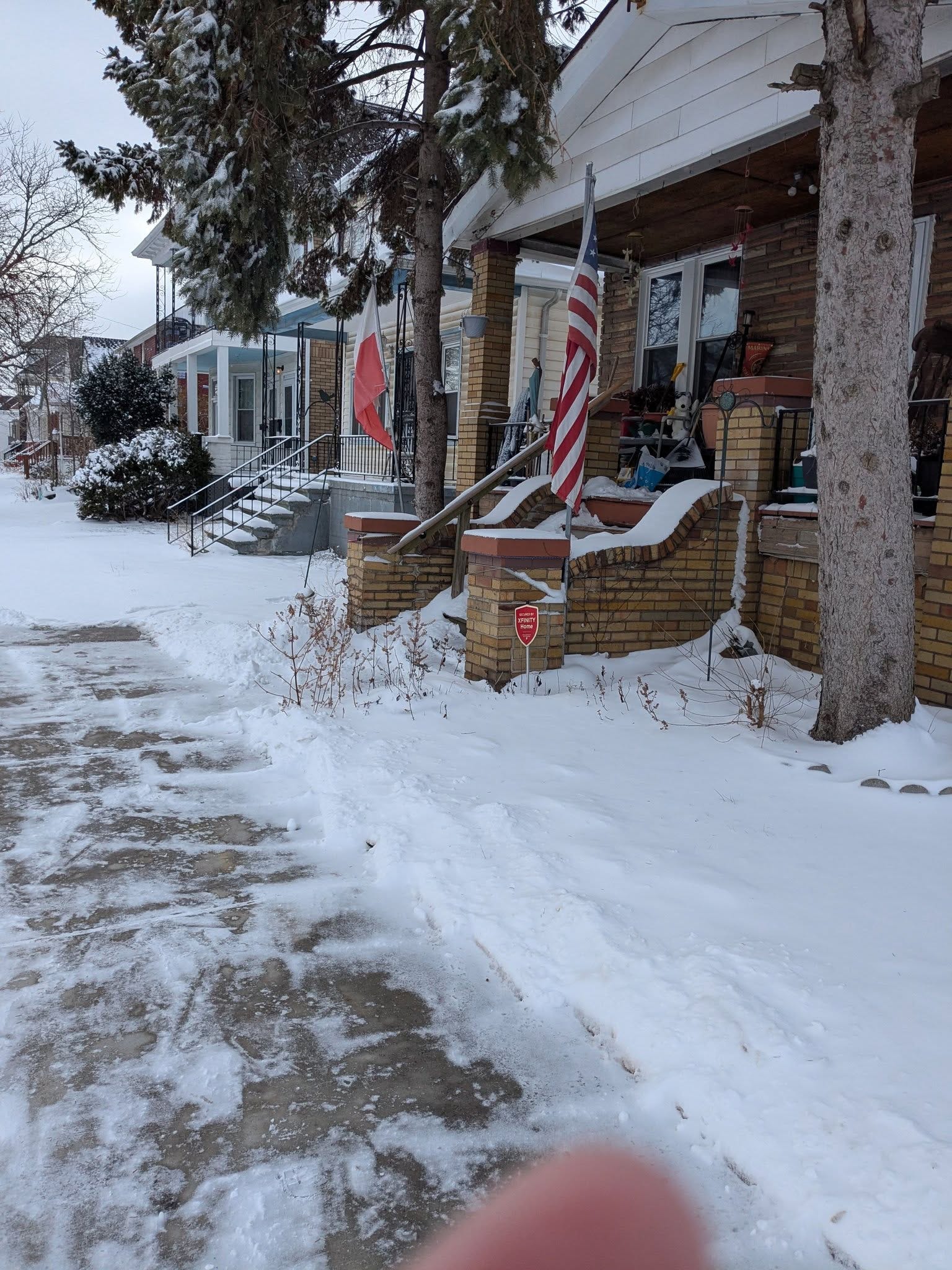
She and her volunteers mow lawns for more than 30 homes; shovel snow for 70 more. They collected donations for one elderly resident to fix up what had been her mother’s home, so she didn’t lose it for code violations. “Twenty volunteers and eight interns worked to make someone feel safe and wanted,” she said.
Gilginas didn’t want me to reveal her salary, but I’ve known fast food workers who made more. However, she feels fulfilled.
“It is a rough world out there, so we step in. Believing that every small thing makes a difference, we take out trash, deliver food, clean alleyways, salt walks. It is not glamorous,” she said.
But she doesn’t care. “What matters is when I get a phone call from a senior who tells me they are now praying for the person who dug their car out from the snow.”
Perhaps the best thing she has done is make the entire diverse little town feel like a community. When I started talking to her, I wondered why she did this. Afterwards, I wondered instead why every city doesn’t have a corps of people like her.
(Editor’s Note: A version of this article also appeared in the Toledo Blade newspaper.)
She sounds incredible. Community building, I believe, is more important than ever in recent history. People don't know their neighbors. At least, not like they used to. I would like to think that there are good people everywhere, and maybe all we need is that kind of dedicated special person willing to help people organize and inspire the community. Beautiful column. Thank you for shining a light on a positive story during a difficult time in history. It was much needed.
👏👏