On Not Having Read Enough
The better read you are, the less you think you are. But the better off you'll be

There’s a consensus that people, especially men, don’t read enough, especially fiction. The other day I saw a headline to that effect in the Atlantic, probably America’s best popular intellectual magazine, touting an article about this, titled “The Real Reason Men Should Read Fiction.” by Jeremy Gordon.
Instantly, I felt a pang of guilt. I indeed thought that I don’t read many novels these days; my idea of a fun read in recent years is more likely to have been an 800-page biography of Charles DeGaulle.
Was I slipping into losing any pretensions of intellectual and literary status and becoming more or less a fact-bound Philistine? The Atlantic article contained a quote published recently in the New York Times by a writer named David J. Morris, who said that if we “care about the health of our society, the decline and fall of literary men should worry you.”
Especially, that is, in the Age of Trump, a man who may never have read a complete book in his life.
Suddenly, I realized that my sudden insecurity was neurotic silliness. I have read ravenously since I was about five. My parents had no intellectual interests, but my mother did encourage me to read. By the time I was a young adult in my mid-twenties, I had read most of Charles Dickens, nearly every word George Orwell ever published; Thomas Mann, Hermann Hesse, Chaucer, Shakespeare, even Spencer.
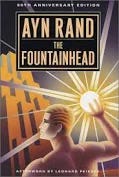
I had a desperate desire to be an educated man. I was not politically correct at all in my reading; I even read the Ayn Rand tryptych; We the Living, The Fountainhead and Atlas Shrugged, books a brilliant literary critic, perhaps Dorothy Parker, memorably called “mesmerizing nutworks.” They are an excellent guide to how people should live, if your goal is to be a solipsistic fascist, but still, as a teenager, I did learn something about life even from them.
In the Fountainhead, a young suckup named Peter Keating stays up all night studying vintage porcelain, in order to make an impression on a doddering old partner and climb the career ladder at his architectural firm.
How many times since have I seen that in real life! Indeed, good fiction can give you far more insights into human nature, politics and economics than a zillion textbooks.
And as for the question of who is going to save us from the present horror, I suggest you turn to the ending of Ray Bradbury’s legendary work of science fiction, The Martian Chronicles. An American family has fled Earth, which is destroying itself, and starting over on Mars. Their children demand to see Martians, a superior race, now apparently extinct, who they think will have the answer to all their problems.
Dad nods, and takes them to a clear pool, and points down at their reflection.
There they were. And today, there we are.
One final comment on reading. Christians, of whom I am also not one, cherish the works of C.S. Lewis, who was also a literary critic. He said once that there was hope for anyone who hadn’t read a great book.
But he thought there was no hope whatsoever for someone who only had read such a book once. Reading actual books may cut down on your video game time. But in return, it may give you a worthwhile life.

Thank you. Reading is essentially learning to be alone and comfortable with yourself, dive into another world or at least explore other points of view. The resulting expansive vocabulary and ability to express oneself and write well are much added benefits. There is much joy in holding a book in our hands and engaging in another world whenever we want. I cannot imagine a world without books!
A worthwhile life...quite a goal. The real challenge is the development of a mind that leads to fulfilling the role of citizen. The current education system with its emphasis on test scores has cast reading fiction aside and we wonder why chronic absenteeism is so prevalent. Everybody points to how Michigan is in the bottom of achievement based on test scores, but ignores the fact that we are in the top ten nationally in chronic absenteeism. Maybe we ought to pursue the root cause of the problem....so thanks for the reading list.