Remembering A Mostly Forgotten Man
Donald Riegle was once on the fast track to power. And then ...

Donald Riegle, a Flint native who served five terms in the U.S. House and three in the U.S. Senate died last Saturday, and when I mentioned this to several people, the most common reaction was “who?” Fame, after all, can be a fleeting thing.
Half a century ago, Riegle was a big deal, even nationally, and he was locked in a dramatic race with a Republican congressman, Marvin Esch, for the senate seat then held by the saintly, but dying, Phil Hart. That was the year Jimmy Carter appeared out of nowhere as the ultimate anti-Washington candidate, and became the first since 1932 to beat an incumbent president. However, that president was Gerald Ford, and he was going to win a solid victory in his home state of Michigan.
There was another huge subplot in this saga: Four years before Riegle had been a Republican member of Congress. Richard Nixon himself had recruited him in 1966, when he was a 28-year-old financial analyst working on a doctorate at Harvard.
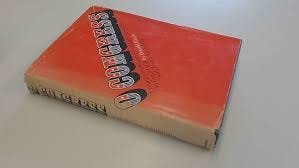
He beat the Democratic incumbent; won three more times as a Republican, and wrote a best-selling book, O Congress, which called for reform and suggested that he, Riegle, would be a good president. (That probably did him more harm than good with his colleagues.) In 1973, as the Watergate scandal deepened, he suddenly switched parties and became a Democrat, earning him Republicans’ lasting contempt.
He was also seen as a ladies’ man, and the Detroit News, which wanted to destroy him, published transcripts of what it said were tape recordings of Riegle pillow talk with an unpaid volunteer. Riegle didn’t deny it, and admitted he was “not a perfect person.”
The public appeared to resent what the News did more than what Riegle had done, and he ran far ahead of Carter and was elected. He won his next two terms by whopping landslides. He became chair of the Senate Banking Committee. But then, disaster. He and four other senators were accused of improperly intervening to help the odious Charles Keating, chair of a huge savings and loan which was under a regulatory investigation by the federal government, which decided not to take action against Keating’s shop. The Senate Ethics Committee said Riegle and two other senators had “substantially and improperly interfered” with the investigation. (The other two were essentially cleared/)
Riegle prudently did not run for reelection in 1994, and thereafter pretty much disappeared. He last emerged briefly to give Joe Biden the finger by campaigning for Bernie Sanders in 2020.
I recall wondering, when he suddenly decided to leave the Senate, what motivated Riegle and who he really was. I never thought I knew.
Thirty years later, I wonder whether he himself knew. And I know I’ll never find out.
Senator Riegle stands out in my mind for delaying the enactment of the Michigan Wilderness Act by eight years after he had originally introduced the legislation. The story is that after he introduced the bill he spoke to a group in the UP who objected to his legislation, and on the spot the senator reversed course, vowed to withdraw his legislation and to not support it going forward. The bill in the House were introduced first by Rep. Bob Carr and after he lost his election in 1982, Rep. Dale Kildee became the wilderness champion, reintroducing the legislation with the same bill number each session until it passed. In the House the bill drew bipartisan support from all MI Democratic members except John Dingell, and from Republicans Carl Pursell and Paul Henry and others.
Riegle maintained his opposition, getting ridiculed, as I recall, by Hugh McDiarmid, Sr., routinely, and drawing increasing numbers of people demanding he support the legislation. Senator Carl Levin, after his election in 1984, was reluctant to take on what was considered controversial legislation, but ultimately agreed after Gov. Blanchard and forest industry groups got on board in recognition of the limited scope of the wilderness protection - 90,000 acres out of 3 million acres of National Forest lands. Pressure on Riegle led him to quietly take a neutral stance, allowing his fellow democratic senator to introduce the Senate legislation. However, in 1986, the U.S. Forest Service (under President Reagan) at a hearing in the Senate on the legislation, called for the removal of the Nordhouse Dunes proposed wilderness from the bill because of private oil interests with leases under the only lower peninsula tract proposed for designation. Levin was furious, and in the first part of the following session moved the legislation quickly through the Senate while the House also passed their bill. Riegle never publicly backed off his opposition to the designation -- I wonder in his last years if he reconsidered as these wonderful places are still protected and available to non-motorized recreational users and studied by scientists.
O Congress was indeed a good inside look at Congress and what goes on. Maybe Tip O'Neals book is perhaps in the same genre. Maybe I have missed them but it doesn't seem like anyone wants to read how Congress seems to work and publishing houses don't want to loose money.
I remember one funny story was about his relationship with the last Democratic Senator from Idaho, Frank Church who he used to refer to as Senator Cathedral.