Why JFK's Memory Still Matters
The President who inspired so many would have been 108 today

**
DETROIT – Twenty or so years ago, I was trying to teach a beginning journalism class how to cover a speech, so I showed them President John F. Kennedy’s inaugural address. Not only is it famous, it is short and punchy and easy to summarize.
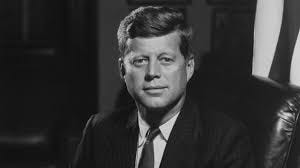
I don’t remember much about what the students wrote, but I’ll never forget what one 19-year-old said had surprised him. “He wore a suit just like they do today,” he marveled. I was tempted to say something like “were you expecting chain mail? A loincloth?
But I was reminded that though I could remember watching that powerful speech as a nine-year-old, these kids were born long after Kennedy lived and died. To them, he was a purely historic figure, not that much different from other old dead white men like Thomas Jefferson. A year or so later, two other students came to me. They had just seen the famous Zapruder film of the assassination.
“Did that really happen?” one said. Well, yes it did. “That’s really shocking,” said a young woman who later became a lawyer.
Did people know about this?” Well, yes it was, and yes, we did.
We all did.
I thought of all this the other day, when I realized that today would have been JFK’s 107th birthday, which seems unreal.
He would have been dead for many years now even if he hadn’t been assassinated at age 46. Given what we know now about his health, it seems unlikely that he would have lived to be very old.
Today, you’d have to be at least in your late 60s to have any memory of him at all. But it is surprising how much his image and the spirit he projected endures. James J. Blanchard, a former governor of Michigan and ambassador to Canada, is still very active campaigning for Democratic candidates and against the proposed tariffs.
He was an early teenager when he first saw JFK on television, and was mesmerized. He was a senior at Michigan State University when the assassination happened. That afternoon, driving to the airport, sobbing, he vowed to devote his life to public service and run for office someday. When Blanchard was elected to Congress and got to Washington in 1975,”I found so many of us were John F. Kennedy’s children, including even some Republicans,” he told me.
What he meant is that they had been inspired to enter politics by JFK. The former governor told me that one of his proudest moments was when he was appointed to the board of the Kennedy presidential library, and that he and his wife Janet attend their annual dinner every May, including the recent one where former Vice President Mike Pence was honored for his role on January 6, 2021.
A few years ago, I had lunch in Florida with two men who were in office during Kennedy’s presidency, Michigan attorney general Frank Kelley and Francis X. Bellotti, then lieutenant governor of Massachusetts. Mr. Kelley regarded an hour he spent alone with JFK during the 1962 campaign as one of the greatest moments of his life.
I asked Mr. Bellotti, a crusty old man who died last year at 101, how he felt when he first met Kennedy. “Like he was the answer to all the problems there were,” he said, with a faraway look in his eyes.
Nobody would claim that JFK or his presidency was perfect. His first months in office were plagued with missteps, especially the clumsy failed attempt to overthrow Fidel Castro at the Bay of Pigs. (In his defense, he inherited the program from the Eisenhower administration.) His relations with Congress were uneven at best.
His often risky promiscuity is now well-known. But he learned quickly, and his success at banning nuclear testing in the atmosphere and avoiding nuclear war in the Cuban Missile Crisis are generally acknowledged to have been diplomatic triumphs, even masterstrokes.
Probably the best assessment of his legacy lies in the title of historian Robert Dallek’s biography: An Unfinished Life. Yet the fact that his memory is still able to inspire people more than six decades after his death is somehow amazing.
Regardless of politics, that’s something we could use a lot more of today. The year after JFK died, Jackie Kennedy said simply that her husband “believed that one man can make a difference, and that everyone should try.” Make that statement gender neutral, and it is, if anything, more necessary to believe today.
-30-
1963 makes me 21 and pregnant glued to a black and white 15 screen. 50 years later I was a player in a class at OCC recreating a trial of his alleged killer who was also dead
Jack, I enjoy and appreciate your historical perspectives. Always on point. I was a college freshman when JFK was murdered. That one event carved the soul out of this country. With a couple of exceptions, it’s been downhill ever since, and now, thanks to an ignorant electorate we’re saddled with the exact antithesis of Kennedy. And thank you, too, for recalling Jim Blanchard — a class act compared with his successor, Trump mini-me, John Engler.