Saturday Question Time
A few more intelligent questions ... and hopefully, intelligent answers

Happy Saturday! If you are anywhere within driving distance of Detroit, I strongly suggest you be good to yourself and go to Eastern Market. Besides all the colorful produce (and sometimes more colorful vendors) I highly recommend crossing the bridge and checking out Gratiot Central Market, and hitting DeVries, a wonderful, seemingly transplanted European-style emporium, after that.
I am aware, of course, that the Supreme Court remembered yesterday that it is still an independent branch of government (two-thirds of its members did, anyway) and struck down most of Baby Bluto’s illegal tariffs. I will have more to say about that tomorrow, provided that he doesn’t start World War III in a vindictive fit tonight.
But first …I have been very happy with all the intelligent questions I’ve been getting, and thought I would answer a couple more that may be of interest.
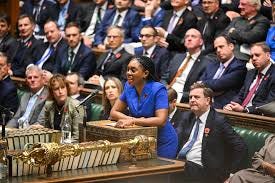
One of the best and most entertaining features of British and Canadian democracy is Question Time, when the Prime Minister has to go to the House of Commons and respond to questions, including those from the opposition. I wish we had that here. I was in Ottawa once when some Liberal Party MPs showed up with turkeys, in case, they said, the hapless Prime Minister Joe Clark needed spare parts. We don’t have anything nearly that marvelous here … but I’ll do my best.
Q) If President Trump quits, dies or gets removed before his term ends, could JD Vance complete his term and then run for two more four-year terms on his own?
A) It depends on when Trump leaves office. The 22nd Amendment stipulates that no one can be president for more than exactly ten years. So if Trump departs before noon on January 20, 2027, Vance would only be eligible to run once. If he leaves after that exact time, Vance could theoretically serve two terms, though if that were to happen, I suspect some of us will be hiding in a pole barn in Manitoba before he was done.
Q) The Constitution (Article One, Section Eight) clearly says that only Congress can declare war. But ever since World War II, wars have been started, prosecuted and ended by our presidents. How is this legal?
A) Excellent question! World War II was, indeed, our last declared war. But when countries began having nuclear weapons, it made sense to give the president the power to retaliate; should the old Soviet Union have launched a first strike against us, we would have had only 20 minutes to use our nukes or lose ‘em, and some would argue that the fact that everyone knew we could strike back immediately we were never attacked.
Now, certainly this authority has been repeatedly abused. The Korean Conflict was sanctioned by the United Nations, and President Truman called it a “police action.” But no president asked Congress to declare war in Vietnam, or Iraq, or in any other of the mini-wars in which we’ve participated. And if you think there’s something wrong with that, you are right. Congress needs to get more background, hold presidents accountable, and make it harder for the executive branch to conduct sustained military adventures.
Q) Finally, on another topic … I’ve been asked who my favorite Michigan governor was.
A) That’s easy. It’s Epaphroditus Ransom, a Democrat who was governor from 1848-1850. Actually, that’s only because I liked his funky first name, which I have no idea how to pronounce. Old Ep was neither born here or died here. He was a lawyer from Massachusetts who came to seek his fortune and ended up in Kalamazoo.
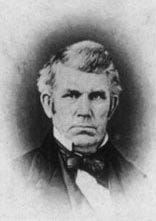
The only thing I know about him politically is that he was totally anti-slavery, more so than some Democrats, and because of that he couldn’t get nominated for another term. He got elected to the Michigan Legislature, which I’m sure was a comedown, and the minute he was offered a new job collecting revenue in Kansas, he got the Eph out of Michigan. He died soon after — he was barely 60 — and they shipped his bones back to Kalamazoo.
True story. But actually, I think we had twenty-four years of two courageous and admirable governors from 1969 to 1991. First Bill Milliken, a pro-Detroit and pro-civil rights Republican, and then Jim Blanchard, a Democrat who had the guts to raise taxes and thereby saved this state. I was lucky enough to know both men well, and I wish we had their like in office today.
For Gov Ransom, try: ih-PAFF-row-DIE-tis for pronunciation, with the major accent on the second syllable and the secondary accent on the fourth syllable. (I found it helped to not try to read it, but just say it aloud a couple times and it makes sense.)
Bet they called him Paffy for short.
First, I agree Milliken and Blanchard were excellent governors. Second, watching British parliamentary shenanigans is always good theater! Happy Saturday!