Something Not To Be Thankful For: Term Limits
They have been very bad for state government in Michigan.

LANSING, MI – Happy Thanksgiving! May your turkey not be dry, and you and yours celebrate happily this year. But when the holiday is over, and government gets back to work, there’s something I won’t be thankful for: Term limits for Michigan’s elected officials.
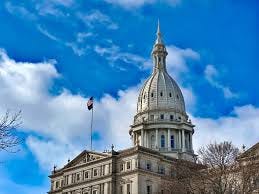
They were sold to the voters back in 1992 as a way of getting new ideas and people in government and limiting the power of special interest groups and lobbyists. Instead, the opposite happened.
They did get new people in, but often, by the time they figured out how things really worked, they were gone. Legislators can stay a maximum of a dozen years on the job in Lansing.
They can spend that time in a single chamber (three state senate or six state house terms) or divide their time between the two. Twelve years in the same chamber makes more sense if they want to acquire expertise in one policy area. Yet just when they have mastered it, they are suddenly required by state law to leave, forever.
This has warped legislative relationships, which used to be fairly collegial, even among ideological opponents. Granted, this wasn’t always the case. Two Democratic state senators, Gil DiNello and John Kelly, once got into a fistfight on the senate floor.
But that was atypical. Back in the 1980’s, when I covered budget squabbles in Lansing, I noticed a pattern. There were a number of lawmakers in both parties who had been there for many years. They knew that the legislature was their career, and despite differences, had a sense of loyalty to the institution. After a certain amount of silliness, they’d get together and decide, “Mary, you get this; Joe, you have to live with that,” and hammered out deals.
Those longtime lawmakers had deep knowledge of their colleagues, of how the legislature functioned and the law. Now, we throw away that cumulative expertise every few years.
We’ve lost more than that. Speakers of the house tended to try to be statesman-like, again, because they represented the entire institution. That’s not the case today. I was shocked last May when Speaker Matt Hall unleashed a virulent attack on a fellow state representative, Democrat Mai Xiong of Warren. She had criticized him for canceling a legislative session so he could go be with President Trump at Selfridge Air Force Base.
“We have this very low IQ representative named Mai Xiong, probably one of the dumbest ones in the legislature,” he began, before mimicking her accent and saying she should make a video thanking him for meeting with Trump “because she’s not doing anything anyway.”
Prior to term limits, no Speaker would ever have talked about any of his or her colleagues that way, and there have been some exasperating or incompetent legislators.
But the irony here is that Xiong, who is 41, is anything but a “low IQ” person. She was born in a Hmong refugee camp in Thailand; came to Ohio and was admitted to the highly prestigious College for Creative Studies in Detroit.
After that, she founded an apparel company; went through a couple political leadership programs, one at Harvard University’s John F. Kennedy School of Government, and was elected first to the Macomb County Commission and then the legislature.
She also married a fellow Hmong-American and has four small children, and effectively skewered Speaker Hall afterwards, after noting that one day her children may ask “why the highest elected official called their mom dumb and ‘low IQ,’” before eloquently noting her accomplishments and questioning his.
Nobody in the old days insulted colleagues like that, if only because they might need them as allies one day. But Hall’s time as Speaker of the House will end much sooner, if Democrats retake the majority in the midterm elections next year.
And in any event, his days in the legislature are numbered, thanks to term limits. When this term ends, Hall will have been in Lansing for eight years, and will only have four years left before he is banned for life. David Gubow, a retired judge who was a highly regarded Michigan legislator before he was termed out, once told me “Michigan bans two types of people from serving: Those in prison and those who have proven they can do the job.”
Lobbyists and special interests love term limits, because new lawmakers tend to be easier to influence, persuade, or bamboozle.
It’s time to admit that term limits were an experiment that didn’t work, though repealing them would take a constitutional amendment and a massive effort that, so far, nobody is willing to tackle, because doing the right thing would be costly and bitterly opposed. But for the sake of us all, someone should try.
And by the way, we have always had the best kind of term limits.
They are called elections.
Politics and Prejudices and other musings is a reader-supported publication. To receive new posts and support my work, consider becoming a free or paid subscriber.
Oh, my. At first, I read the headline as you being in favor of term limits. Yeah it's early. (I imagine that you are still sound asleep, and that this was posted automatically. Prove me wrong, as they say these days.)
This is absolutely one of my pet peeves, although that is too mild of a term for it.
It's infuriating.
Does the term "baby out with the bath water" ring a bell?
I will never ever vote to take away my right to vote. And that's what it is.
I frequently quote Dave Wakeling of the band English Beat in the song "Sugar and Stress":
"This world is upside down
The rights and wrongs don’t get much wronger
Mistakes found in the past turn into rules protecting power"
My sister ( Maxine Berman) who passed away almost 8 years ago was very much against term limits. She was Southfields state rep for almost 20 years. She felt that people in the legislature had to have time to get to know each other and work together and the work they were doing. Term limits prevent this.